ISLAMABAD: The Economic Coordination Committee (ECC) of the cabinet on Thursday approved over Rs225 billion in supplementary grants, including a Rs200 billion equity injection for power distribution companies (Discos) to address acute cash-flow constraints in the power sector.
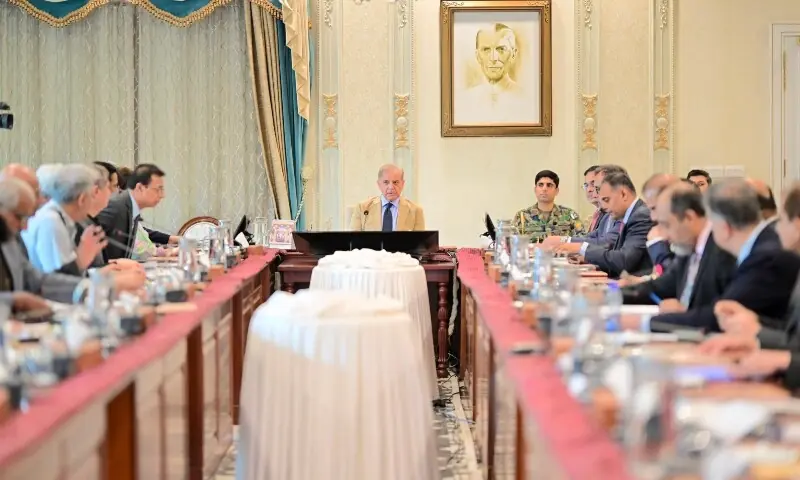
The meeting, chaired by Finance Minister Muhammad Aurangzeb, also cleared funds for parliamentarians’ development schemes, eased eligibility criteria for the Prime Minister’s Fan Replacement Programme, approved compensation for families of missing persons, and reviewed inflationary trends, noting a marked improvement in price stability.
The ECC approved Rs12 billion for the Sustainable Development Goals (SDGs) Achievement Programme—commonly referred to as parliamentarians’ constituency schemes—under three heads. Of this, Rs6.358 billion was sanctioned for SDGs schemes in Punjab, Islamabad Capital Territory, Sindh and Khyber Pakhtunkhwa, while an additional Rs40 million was approved for SDGs schemes under the defence sector. A further Rs5.2 billion was granted to the Ministry of Housing and Works for the Pakistan Infrastructure Development Company Ltd (PIDCL) for development projects in Sindh and Khyber Pakhtunkhwa.
To stabilise the power sector, the ECC approved disbursement of Rs200 billion out of the Rs400 billion budgeted for lump-sum subsidy payments, excluding tariff differential subsidies. The amount will be treated as the government’s equity investment in Discos to improve liquidity. Overall, the government has earmarked Rs1.036 trillion for power sector subsidies, including Rs495 billion for tariff differential subsidies, Rs400 billion for liquidity support, Rs50 billion for guaranteed payments to Chinese power producers and Rs95 billion for other producers.
The committee also approved revisions to the eligibility criteria for the Prime Minister’s Fan Replacement Programme, increasing the allowable delayed bill payments from two to four months over a 24-month period to ensure smoother implementation and promote energy efficiency.
Additional approvals included Rs5.76 billion for the establishment of Danish Schools in Azad Jammu and Kashmir, Gilgit-Baltistan and Balochistan, and for implementation of the Prime Minister’s Youth Skill Development Programme through NAVTTC. The ECC, however, advised exploring public-private partnership models to ensure long-term sustainability.
An amount of Rs170 million was approved for the Pakistan Tourism Development Corporation’s (PTDC) FY26 budget, with directions to prepare a comprehensive business plan aligned with the national tourism strategy. The ECC also sanctioned Rs4.775 billion for 945 families of missing persons on humanitarian grounds, to be disbursed under the supervision of the Commission of Inquiry on Enforced Disappearances.
Other approvals included Rs79 million for annual maintenance of helicopters of Frontier Corps Balochistan (North), Rs10.821 million for repair and maintenance of Pakistan Rangers (Sindh) helicopters, Rs2.5 billion for construction of additional family suites for parliamentarians, and Rs250 million for operationalisation of King Hamad University of Nursing and Allied Medical Sciences.
Reviewing inflationary trends, the ECC noted that average inflation during the first five months of the current fiscal year stood at 5 per cent, down from 7.9 per cent in the same period last year, reflecting improved price stability despite temporary flood-related supply disruptions earlier in the year.
Story by Khaleeq Kiani